How to design a wedding you’ll enjoy
For most people, it’s the first time you’ve ever been asked to orchestrate something so personal, so public, and so emotionally loaded - all at once.
You may have helped friends or family along the way. You may have bookmarked ideas, saved screenshots, absorbed expectations by osmosis. And still, when it’s your turn, it can feel strangely disorienting.
Where do you actually begin?
And how do you make sure the day that takes shape feels like yours, not a collage of other people’s weddings, trends, or well-meaning advice?
Before you choose a venue, fall into a colour palette, or even think about what you might wear, there is a quieter place to start. A handful of questions that cut through the noise and bring you back to yourselves.
This piece is here to guide you through that first, foundational stage - helping you shape a wedding that grows from who you are, not just what you’ve seen.
Who are you when you’re together in the quiet moments?
How do you spend your time when it’s just the two of you? When there’s no obligations or expectations – when you are just you?
What lights you up and lifts your mood? What music finds you when you’re full of energy and excitement – and what do you drift to when you’re wanting to relax?
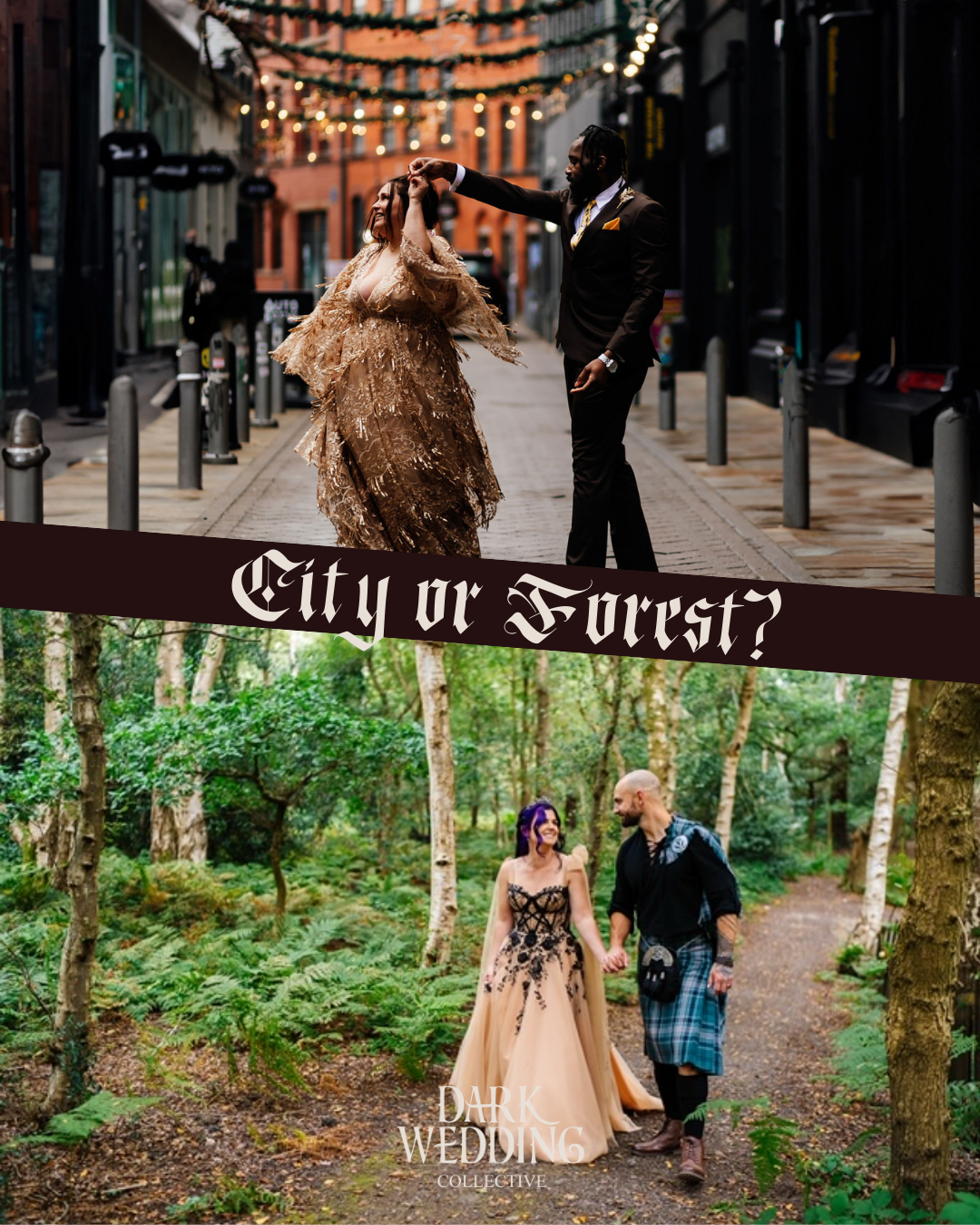
Do you soften in forests, come alive by candlelight, or love vibrant cities and grand spaces?
Think about where you feel grounded and happy.
We see couples come unstuck in two ways:
· Creating something to please other people, but doesn’t feel like home
· Feeling the pressure to outdo other alternative weddings, or to feel ‘editorial enough’ to deserve attention.
Both scenarios lead to a beautiful day, but it can sometimes feel like it’s not your own.
Our advice is both simpler and braver… design from values, not visuals!
Rather than designing your wedding around trends, it can be far more revealing to ask where you naturally fall. Not where you think you should land, but where you feel most at home. These aren’t rules or categories to fit into, but axes you can move along - helping you understand what kind of experience you’re really trying to create.
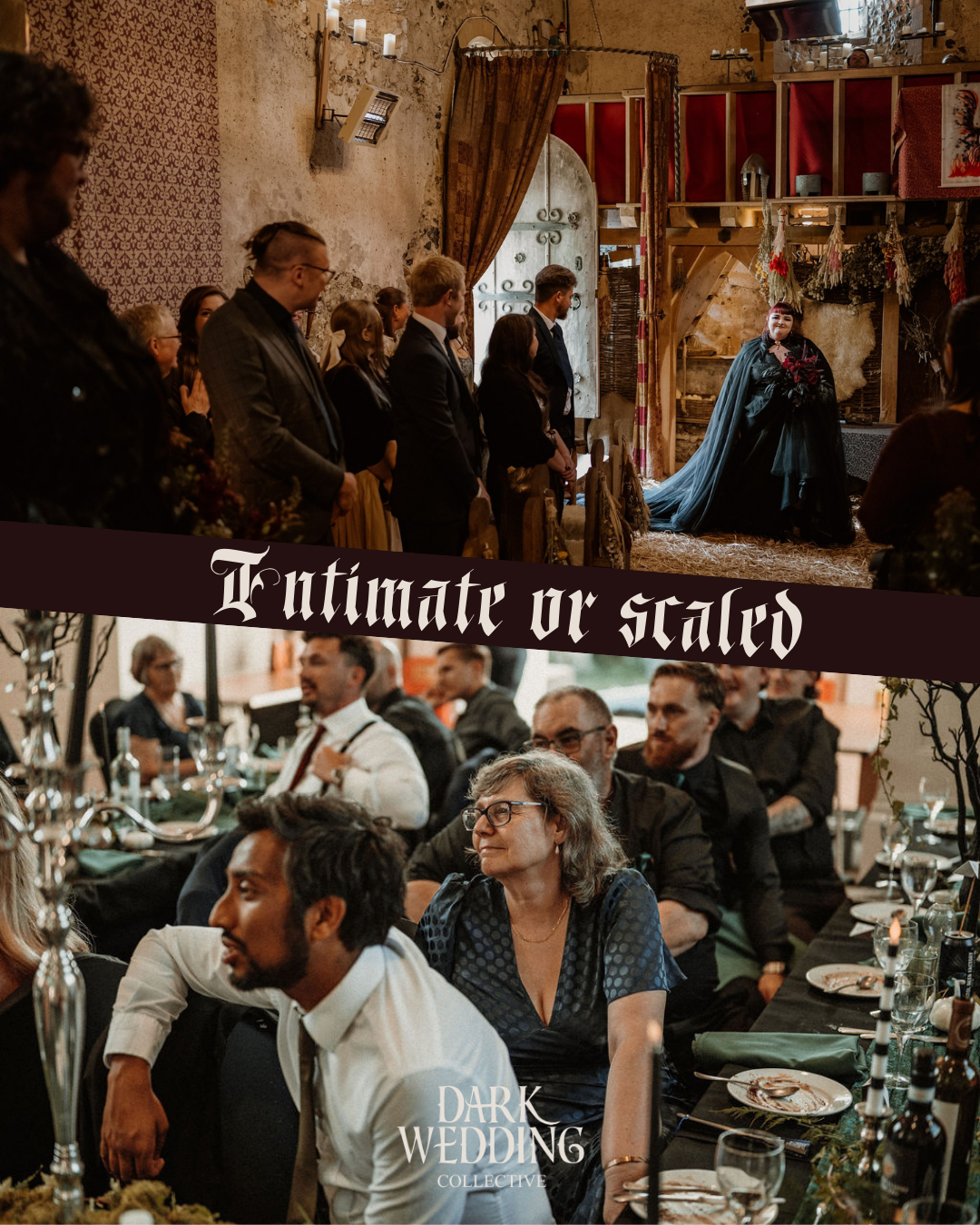
The first is intimacy versus scaled. Some couples crave closeness: eye contact and a sense that the world has narrowed to the people who matter most. Others are energised by scale; dramatic spaces, collective awe, the feeling of stepping into something vast and unforgettable. Neither is more meaningful than the other. What matters is knowing which one feeds you.
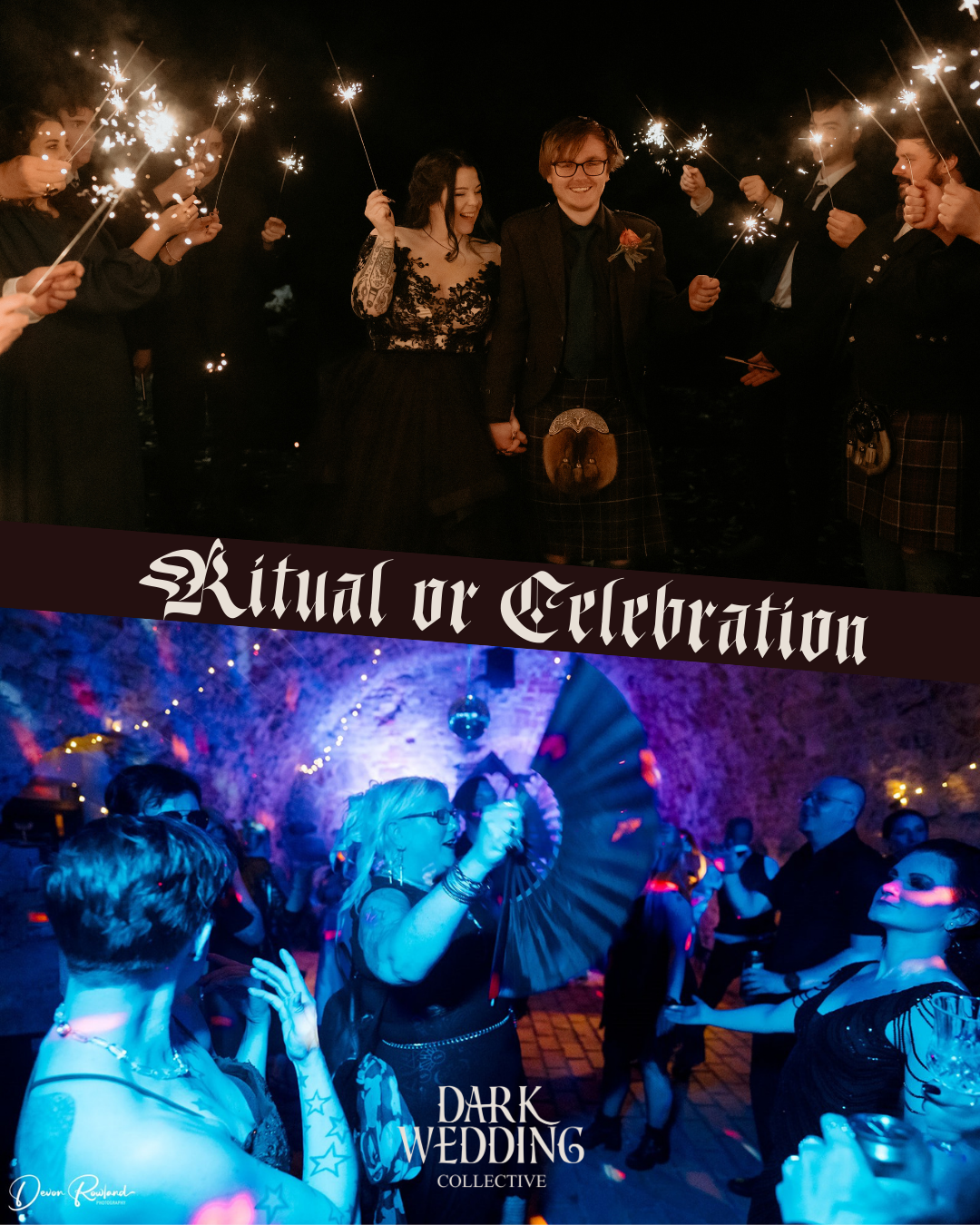
The second is ritual versus party. You may be drawn to symbolism, intention, and moments that feel sacred or ceremonial; gestures that carry weight beyond the day itself. Or you may be craving release: music, movement, laughter, and the kind of celebration that spills late into the night. Most weddings hold elements of both, but understanding which one sits at the core can guide every decision that follows.
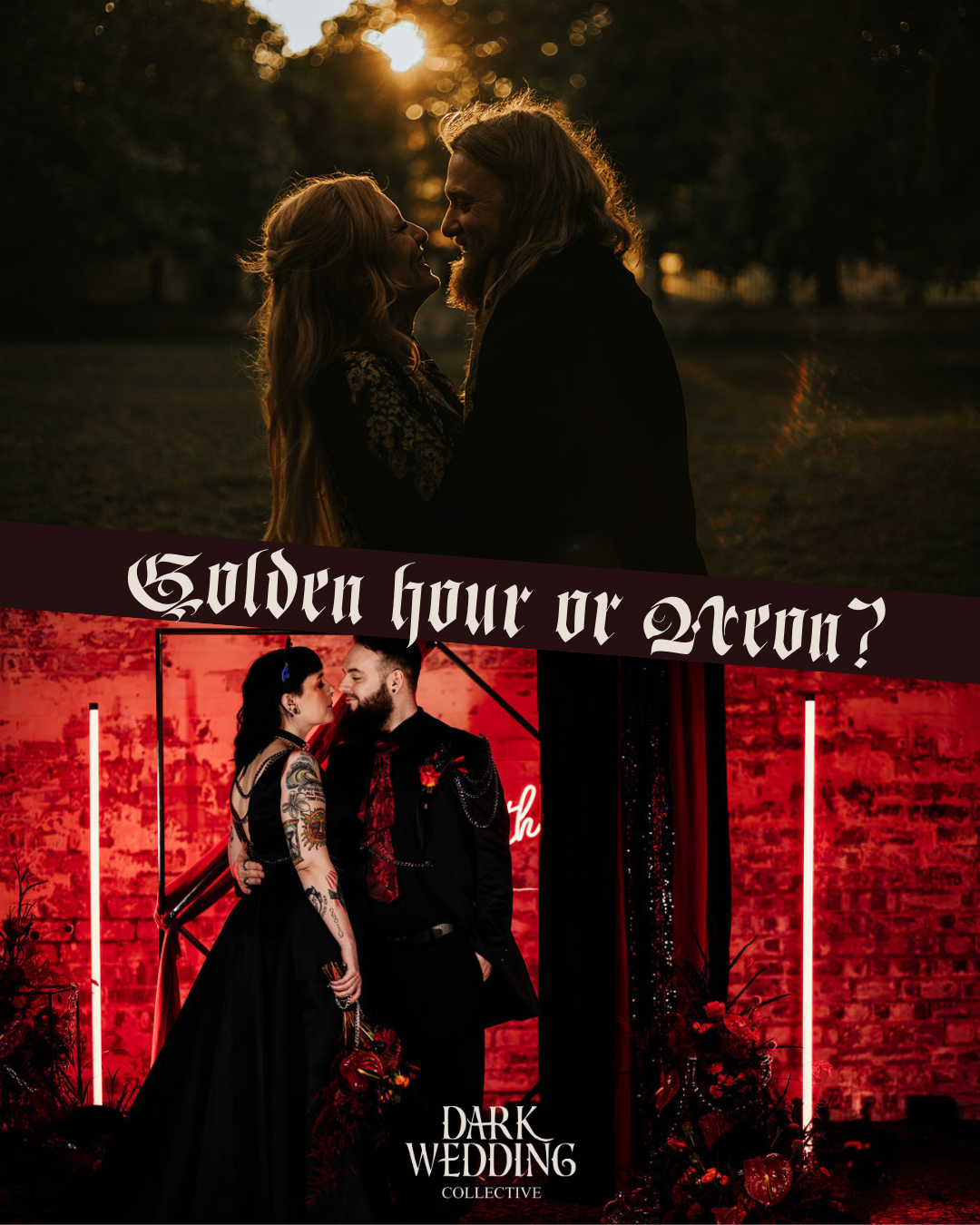
The third is heirloom versus statement. Some choices are about continuity; pieces that feel timeless, that could be held, worn, or remembered decades from now. Others are about expression in the present: bold, unapologetic moments that announce who you are without compromise. Again, there is no right balance - only the one that feels true to you.
There is no correct answer here. Only alignment.
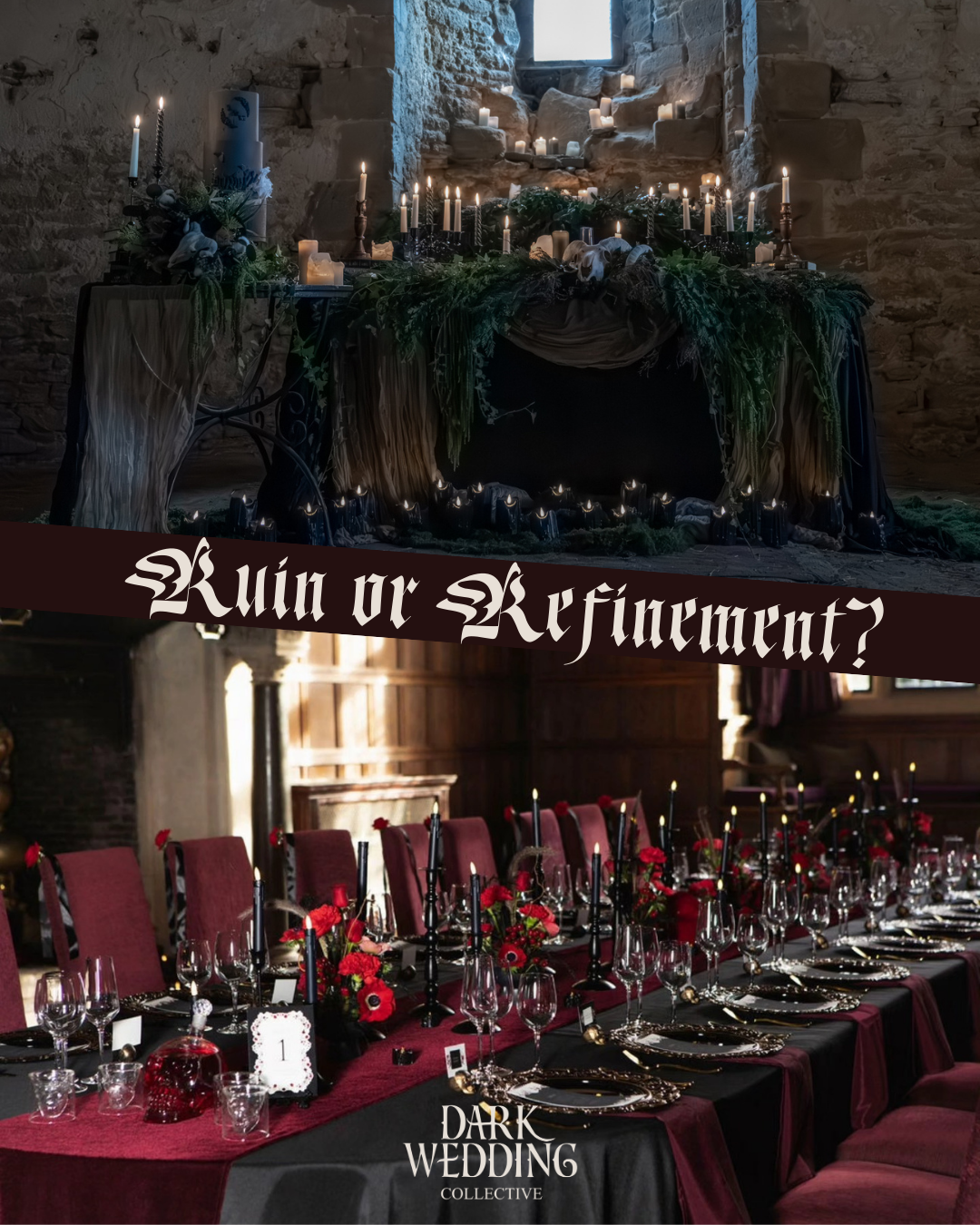
Once you have a sense of where you sit along these axes, the shape of your day begins to reveal itself. Intimacy might point you toward smaller, more contained spaces where conversation and connection can breathe, while spectacle may call for scale; architecture, landscape, or rooms that hold presence and drama. A ritual-led wedding might prioritise timing, ceremony, and moments of pause, whereas a party-driven one may shape itself around flow, music, and energy. Even your relationship to heirloom or statement can influence everything from the venue to the materials, the lighting, and how much of the day is designed to endure versus exist fully in the moment.
These answers don’t limit you, they act as a compass, helping you choose spaces, suppliers, and structures that support the experience you’re trying to create, rather than working against it.