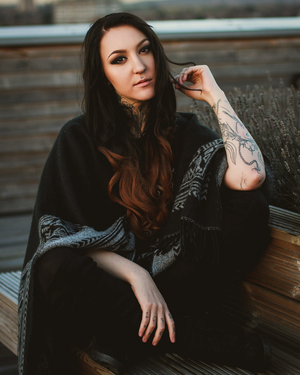
Seven Wedding Photo Decisions Nobody Warns You About
You've booked your photographer. You love their work. Job done, surely?
Almost. There's a handful of decisions that shape your photographs far more than most couples realise, and nobody tends to mention them until a few weeks before the day. By then, the timeline is fixed and the invitations have gone out.
Here are the seven worth making early.
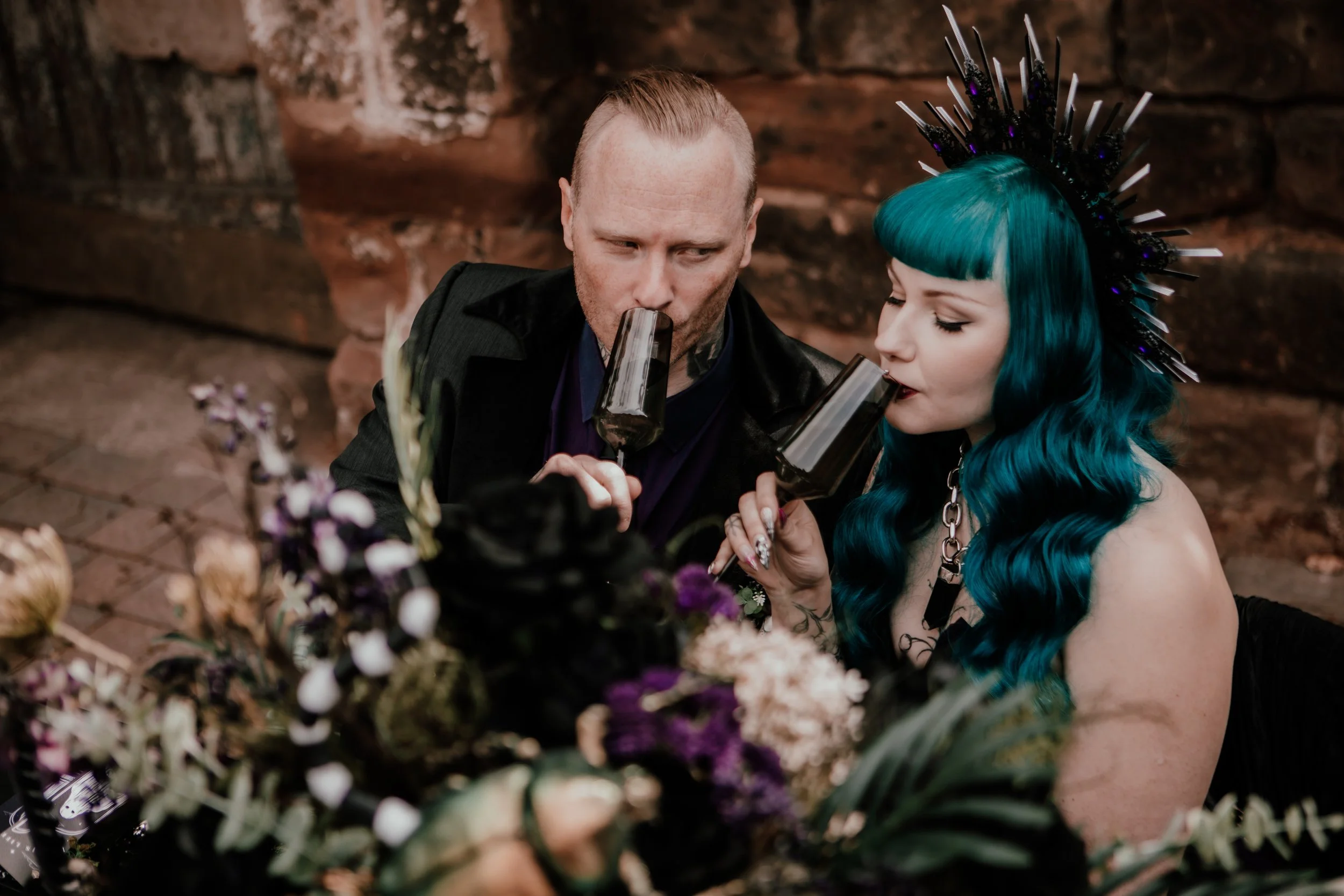
Laura Fitzgerald Photography
1. Phones Away, Or Phones Out?
An unplugged ceremony means asking guests to put their phones and cameras away while you say your vows.
The case for it is simple. You get to look out at faces instead of screens, and your photographer gets a clear aisle instead of an arm holding an iPad.
The case against is that some guests love taking their own pictures, and you may love seeing them the next morning.
There's a middle path that works well: phones away for the ceremony, then free rein for the rest of the day. Whatever you choose, have your celebrant announce it. Guests take it far better from the person at the front than from a sign.
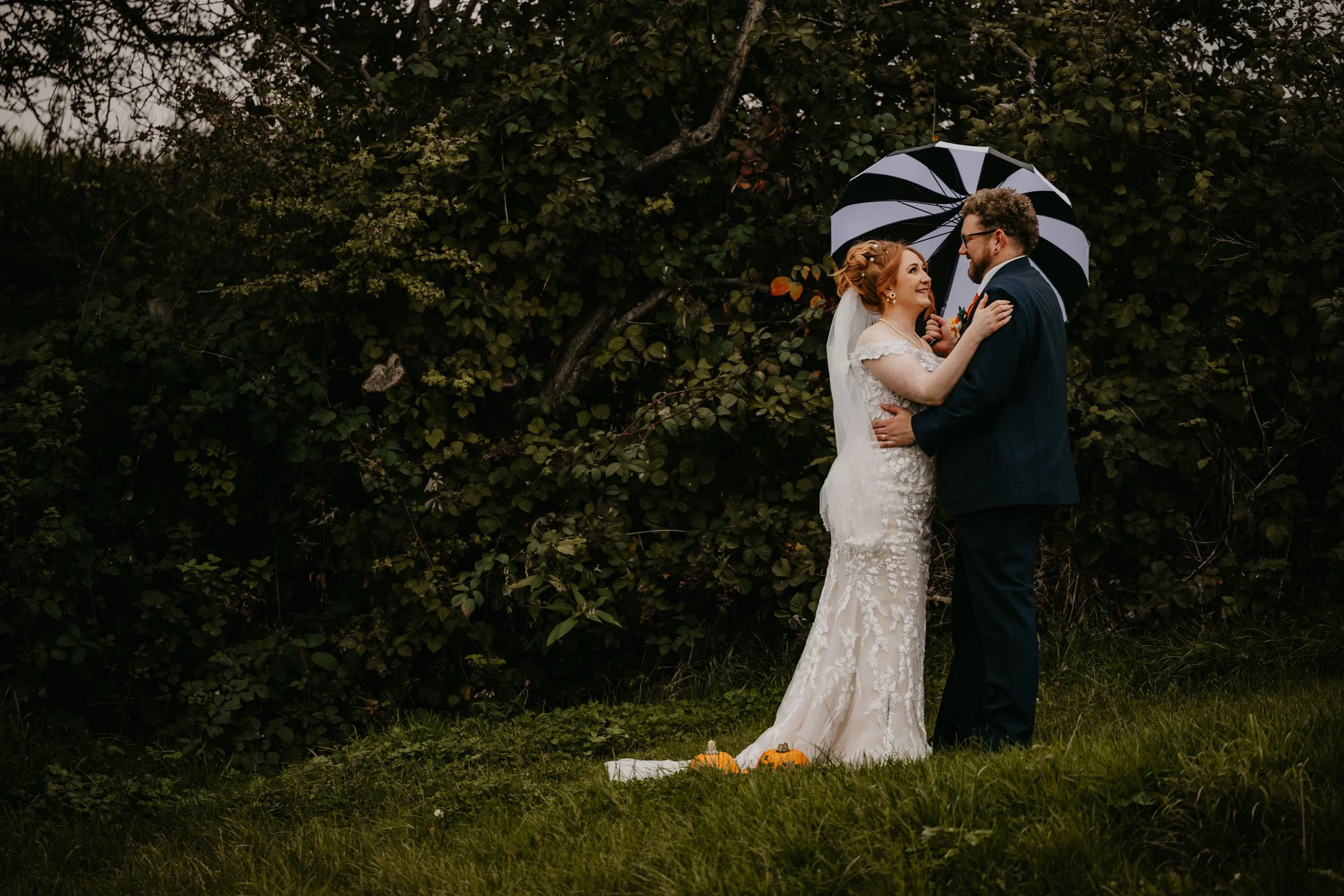
Lucie Carr Photography
2. Will You See Each Other Before The Ceremony?
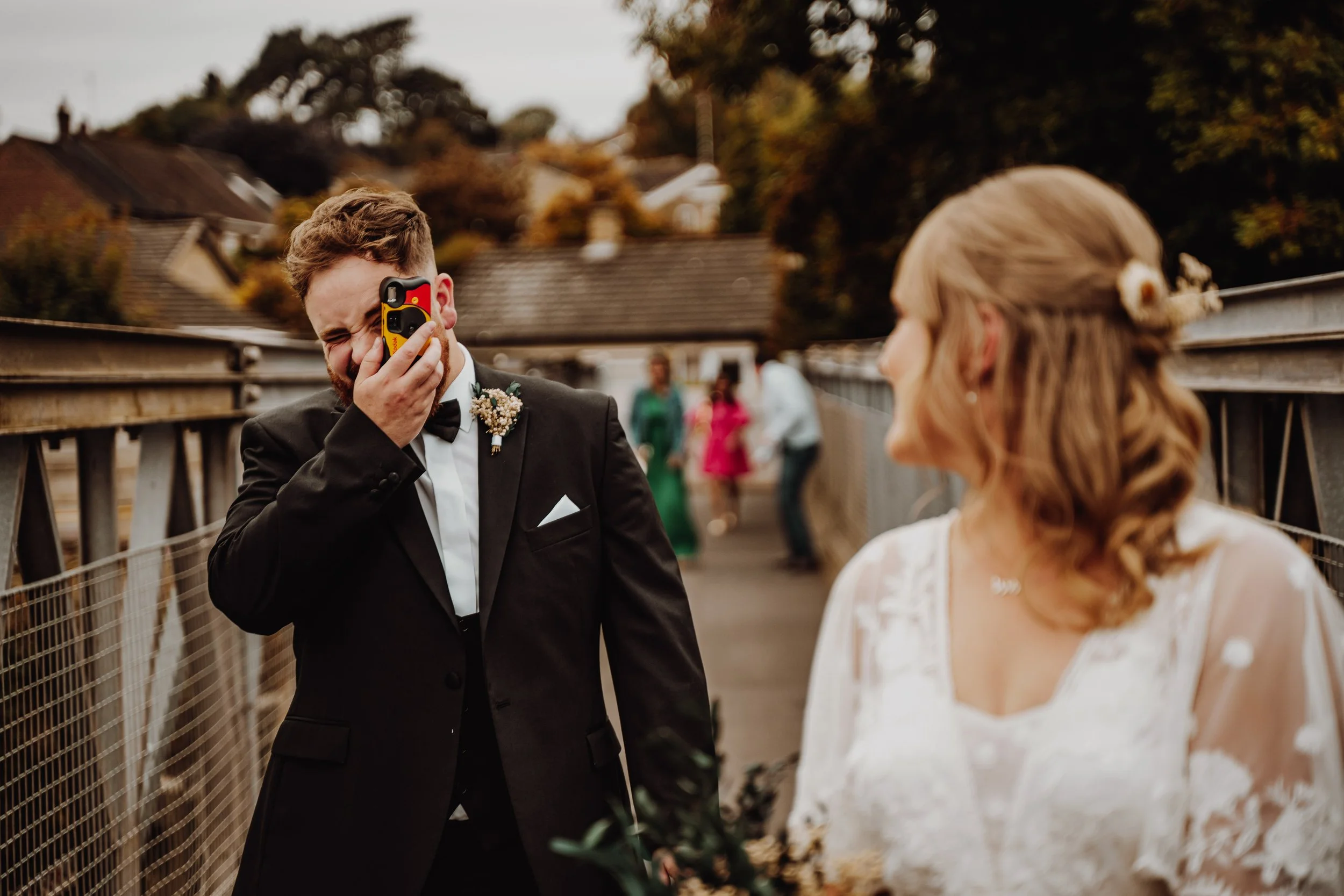
A first look is a private moment, just the two of you, before the ceremony begins. No guests, no aisle, only your photographer at a distance.
It isn't for everyone. If you've dreamed of that first glimpse happening as you walk in, keep it.
But it has real advantages. Nerves settle. You can do your portraits beforehand and go straight to your guests afterwards. And if your ceremony is late in the day, it may be the only way to get photographs of the two of you in daylight.
Vicky Dubois Photography
3. How Many Group Photos Do You Actually Want?
Every group photo takes a few minutes: finding people, arranging them, waiting for the uncle who's gone to the bar. Ten groups can quietly eat most of your drinks reception.
Write the list in advance and be ruthless. Most couples are happy with five or six. Then give the list to someone loud who knows both families, and make it their job to round people up.
If formal line-ups aren't your thing at all, say so. One big photograph of everyone and a lot of natural ones through the day is a perfectly good plan.
Wild River Ravens Photography
4. Where Are You Getting Ready?
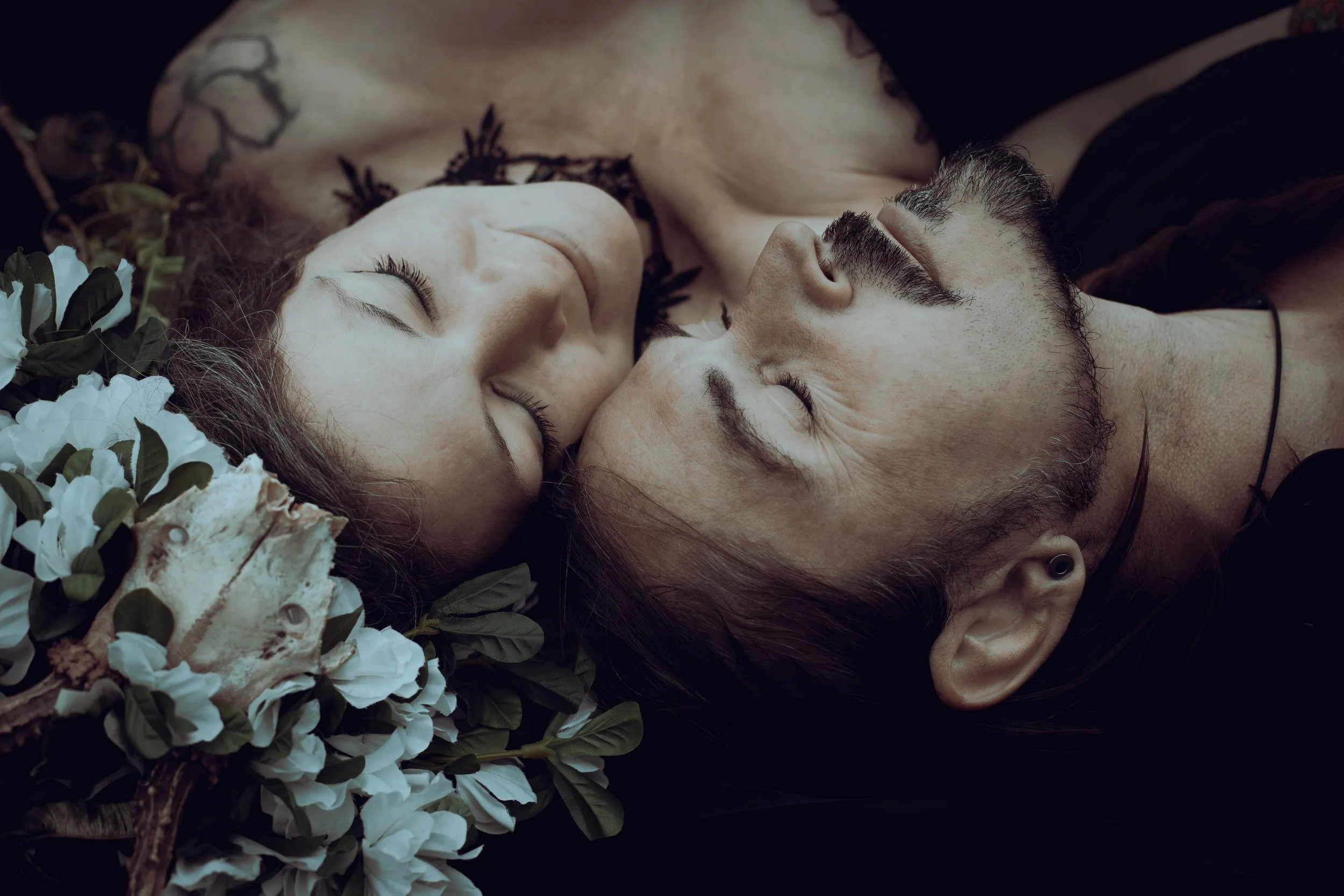
The getting ready photographs are often some of people's favourites, and they depend almost entirely on the room.
You're looking for two things: a window, and somewhere to put the clutter. A small room with good daylight beats a huge one with none. Ask whoever's with you to keep bags, packaging and breakfast plates in one corner.
If your outfit, jewellery, rings and stationery are together in one place when your photographer arrives, you'll get those detail shots without anyone hunting for a missing shoe.
Burn The Script
5. What Is The Light Doing?
This one matters most for dark weddings.
Candlelit rooms, wood panelling, deep colours and winter afternoons all look wonderful, and they're all harder to photograph than a white marquee in June. A good photographer will relish it. But they need to know what's coming.
Tell them what time your ceremony is, what time the sun sets on your date, and how the room will be lit. Ask to see a full wedding they've shot in low light, not only highlights.
Then build the timeline around it. Moving a ceremony half an hour earlier can be the difference between portraits at dusk and portraits in a car park under a street lamp.
Shot by Rutley
6. What Does Your Venue Allow?
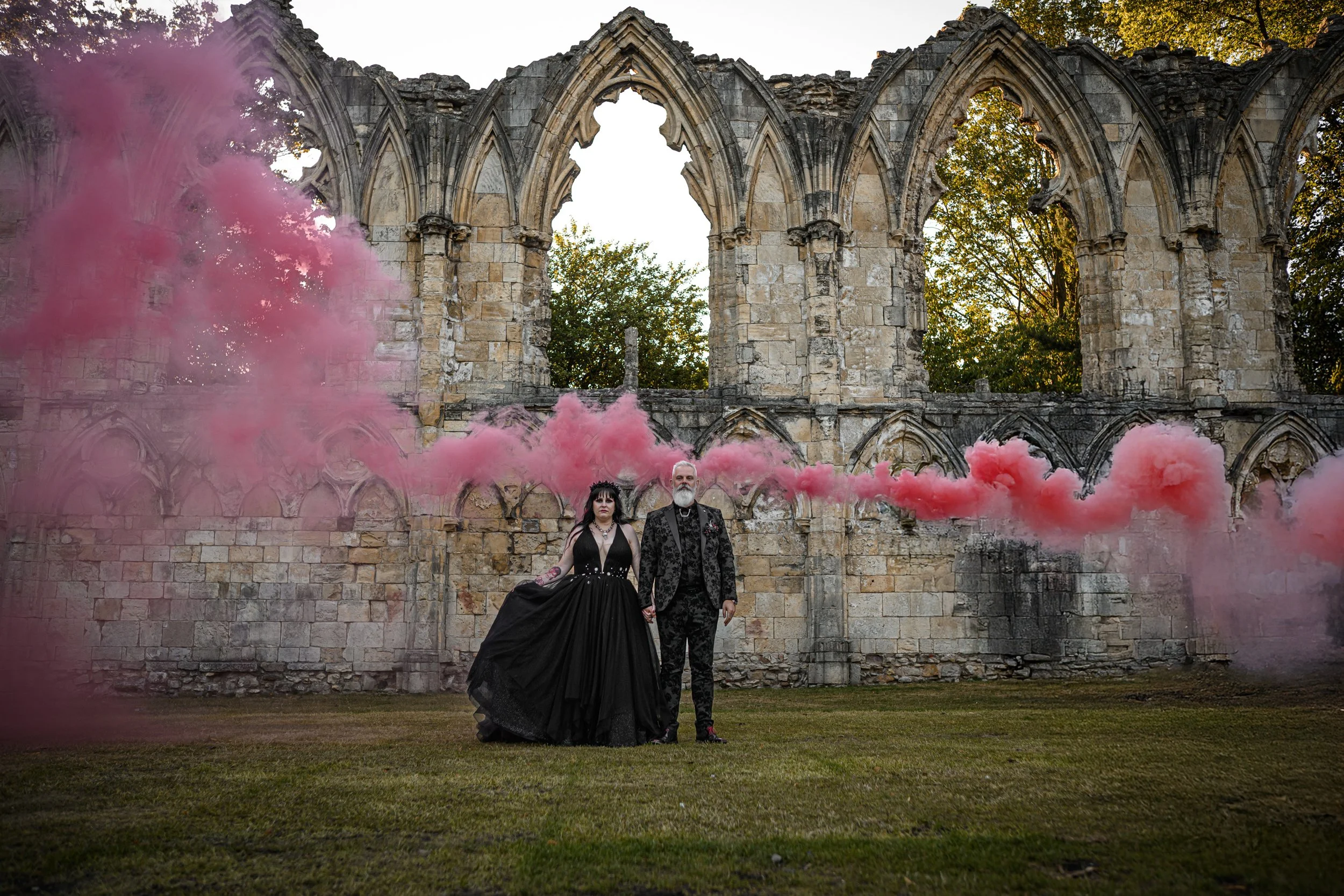
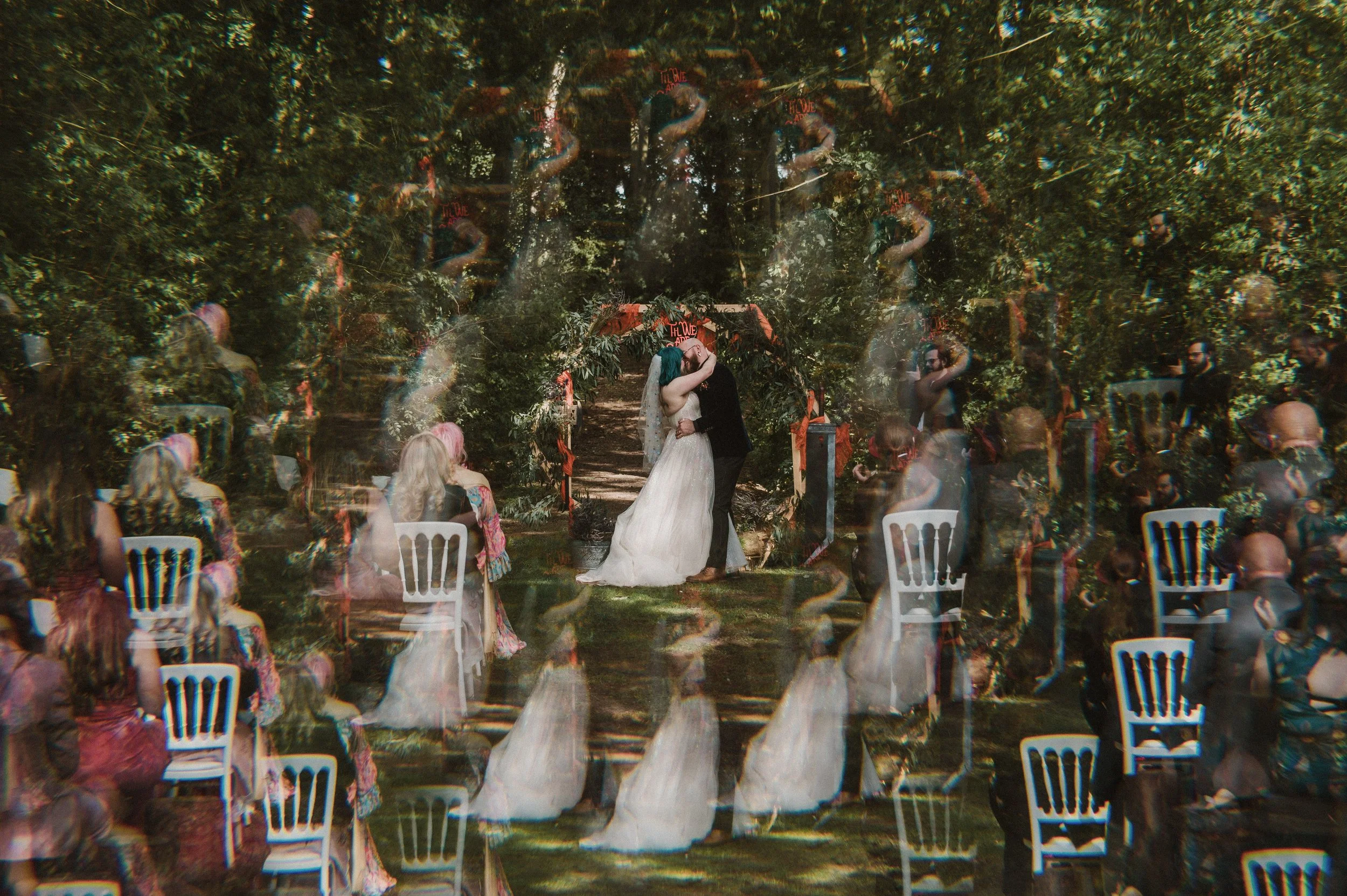
Smoke bombs, sparklers, real candles, confetti, flash during the ceremony. Venues have rules about all of them, and so do some celebrants and registrars.
Ask early, in writing. If the answer is no, you have time to find another way to get the atmosphere you wanted. Finding out on the day, with a box of sparklers in your hand, is no fun for anyone.
Moor & Moon Photography
7. What Don't You Want?
Photographers get told what couples want all the time. They're told what couples don't want much less often, and it's just as useful.
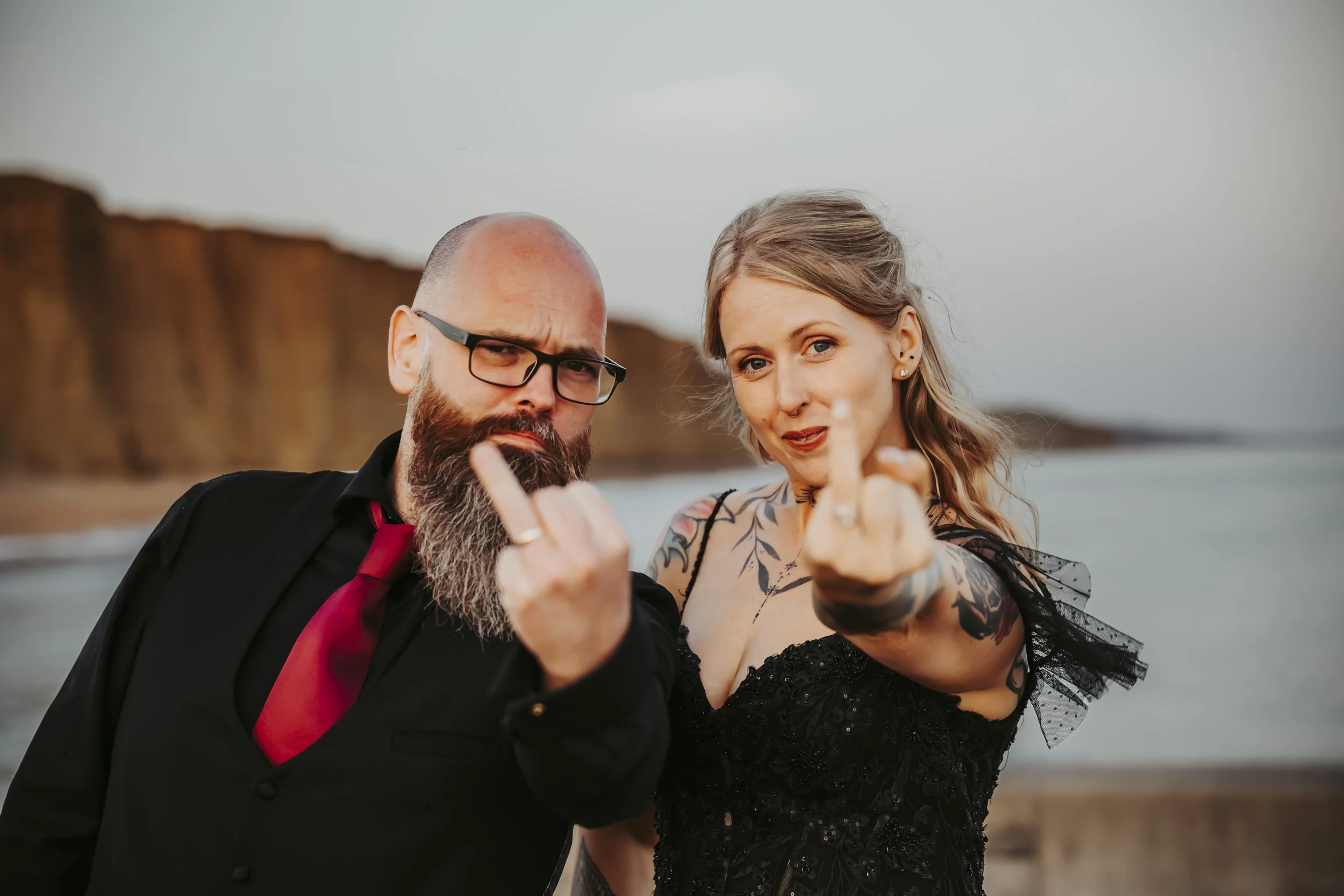
If you hate posed photographs, say so. If there's a side you don't like, a relative who shouldn't be placed next to another, or a tradition you're skipping, say that too. If you'd rather your tattoos were shown than hidden, mention it.
None of this is being difficult. It's the information that lets someone photograph you as you are.
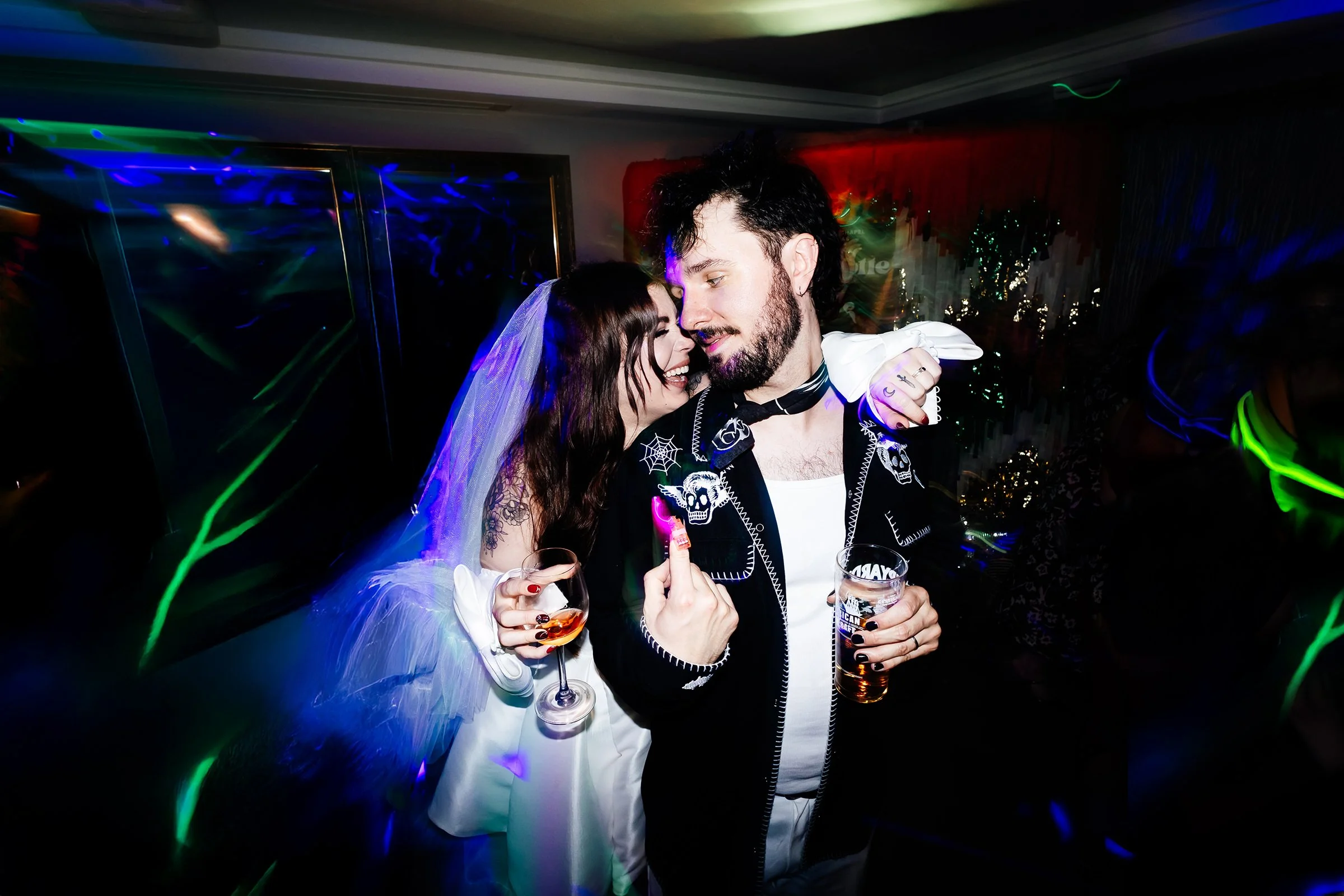
Gem Wright Photography
Have The Conversation Early
Every one of these is easy to sort out six months ahead and awkward to sort out six days ahead. Book a call with your photographer, go through the list, and then stop thinking about it.
On the day, your only job is to be there.
If you're still looking for a photographer who's at home in the dark, you'll find them in the Dark Wedding Directory.
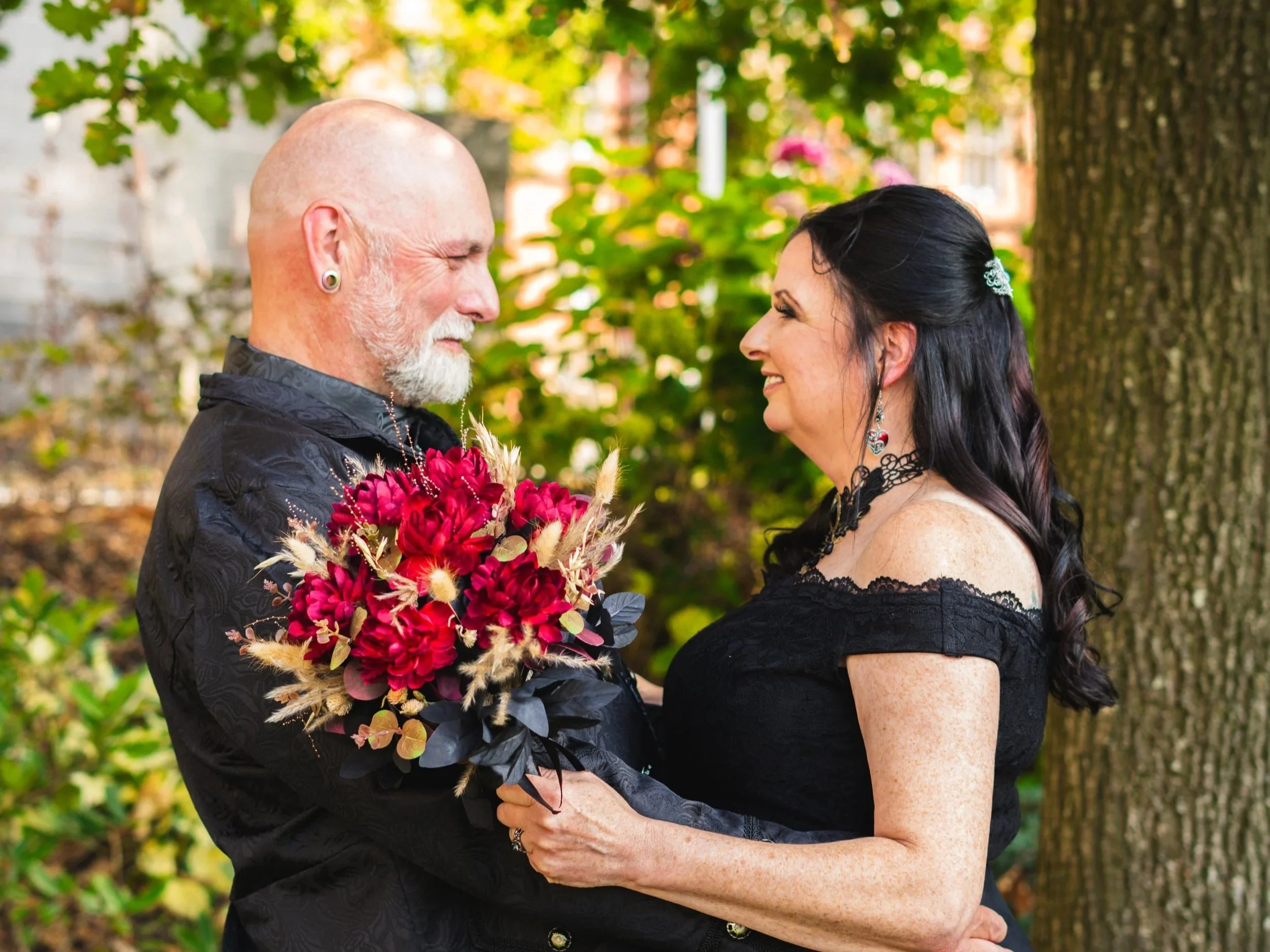
Hells Bells Photography